Koramangala, Koramangala 8th Block, Bangalore - South, Karnataka

Koramangala, Koramangala 8th Block, Bangalore - South, Karnataka
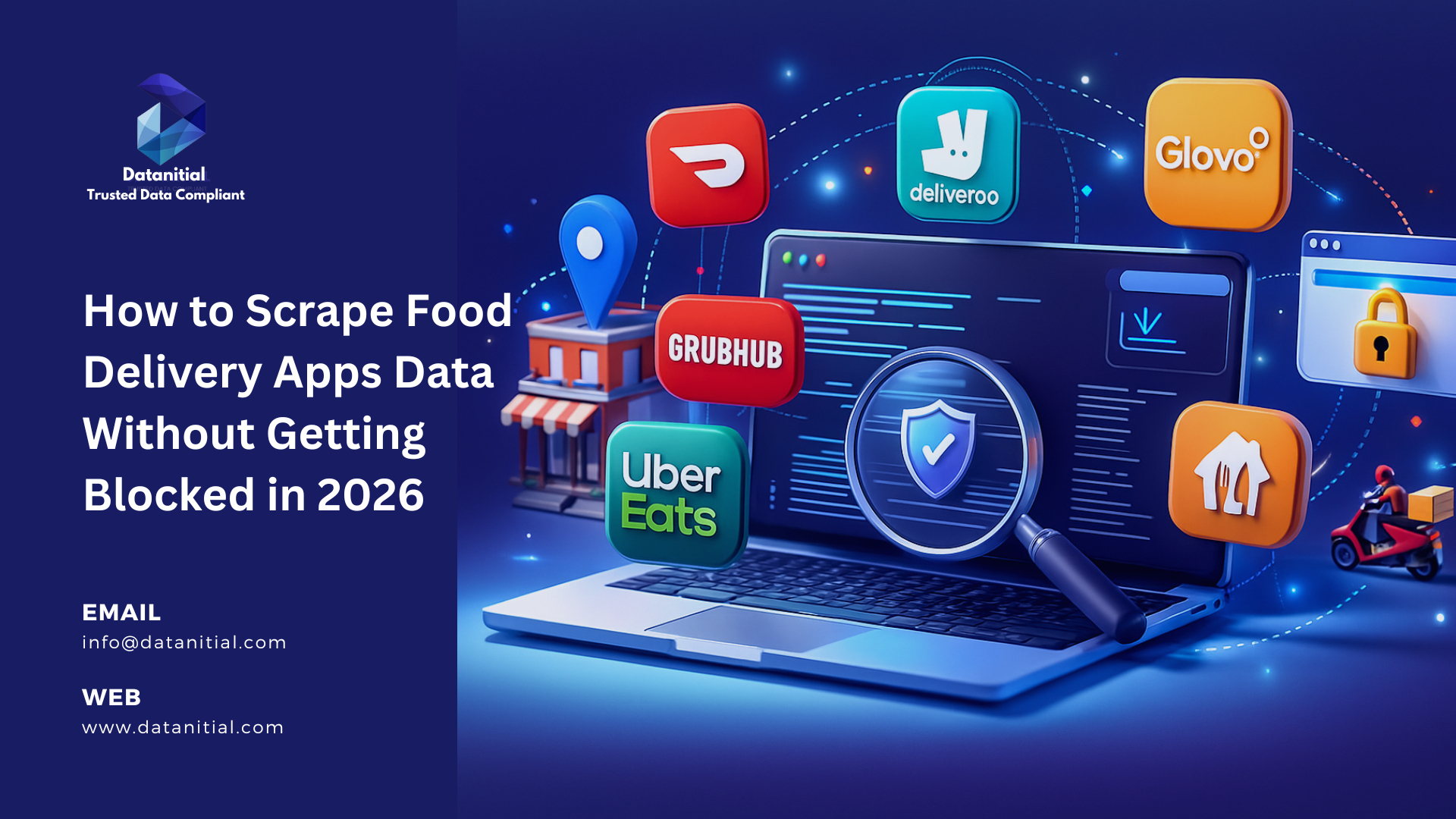
Food delivery platforms operate on dynamic, data-heavy systems built to serve millions of daily users. Their menus, prices, delivery fees, discount structures, restaurant onboarding, and ranking algorithms change frequently. For competitive intelligence, restaurant analytics, market research, pricing audits, and operational benchmarking, businesses need continuous access to this data.
The challenge is that the major platforms Swiggy, Zomato, Foodpanda, Grab, and Uber Eats run strict anti-automation systems designed to stop unauthorized scraping. These safeguards block bots, throttle traffic, invalidate sessions, and flag non-human patterns almost instantly.
Scraping these apps is possible, but only if you understand why blocks happen and how their detection layers work. With the right architecture API reverse engineering, mobile emulation, fingerprinting, token handling, proxies, and distributed throttling—you can extract the required data reliably for long-term use. Providers like Datanitial build systems around these methods to ensure consistent, block-resistant data pipelines.
Food delivery companies defend their systems aggressively because their data is sensitive, frequently updated, and core to the user experience. Several triggers initiate blocking:
Apps restrict how many requests a user or device can make within a short time window. Surpassing these thresholds signals automated behavior, which results in API throttling, temporary bans, or full session termination.
Automated scrapers generate patterns uniform timing, sequential navigation, identical request signatures—that stand out from human interaction. Machine learning models running on the backend identify these deviations.
Directly hitting internal APIs with unauthorized headers, missing tokens, malformed parameters, or invalid session IDs exposes bot usage. These violations trigger authentication failures and IP bans.
Mobile apps fingerprint every device. If your scraper doesn’t match a real environment OS version, hardware model, screen resolution, device ID—the request is flagged.
IPs with previous abuse history, datacenter origins, or sudden traffic spikes are blocked automatically. Food delivery apps prioritize residential and mobile IP patterns; anything else raises suspicion quickly.
Food delivery apps rely on multiple detection strategies operating simultaneously. Understanding them is essential to designing a scraper that avoids triggering block rules.
The mobile apps validate SSL certificates to prevent traffic interception. When SSL pinning is active, traditional traffic inspection tools fail unless bypassed. Without proper patching, API extraction becomes impossible.
Every authenticated call uses short-lived tokens. Apps monitor refresh intervals, invalid token reuse, and inconsistent session handling. A scraper that fails to replicate real token behavior will lose access instantly.
API requests must match valid mobile app user-agents, including exact OS versions and app versions. Outdated or generic user-agents are flagged automatically.
Navigation speed, request sequencing, and click simulation patterns are monitored. Human users generate irregular timing; bots do not. A scraper must randomize internal behaviour to avoid detection.
Modern mobile apps track telemetry like touch events, scroll depth, screen rendering, device orientation, and app lifecycle events. Missing telemetry is a strong indicator of automation.
This is the most reliable method to scrape food delivery apps at scale.
It involves:
A correct implementation produces consistent, structured data with minimal block risk. Token management and dynamic headers must be automated to maintain long-running sessions.
Where direct API access is too restrictive, controlled mobile emulation replicates real device behaviour.
Key requirements:
Emulated scraping is slower than API-based extraction but significantly reduces block triggers for apps with aggressive real-time detection.
Scraping must operate from IPs that resemble real users.
Critical points:
Each device fingerprint should map consistently to an IP. Random mismatches trigger instant bans.
Every request must replicate:
If any element doesn’t match the expected app profile, the request is blocked.
Scraping should not originate from a single machine or region.
Scalable patterns include:
This setup ensures natural traffic behaviour and minimizes anomaly detection.
With the right techniques, you can capture most publicly accessible datasets from food delivery apps.
Item names, descriptions, variants, customization options, and add-ons.
Base prices, dynamic pricing patterns, surge adjustments, discount logic, and time-based price variations.
Zone fees, peak-hour multipliers, distance-based charges, and platform fees.
Menu images, restaurant banner images, and dish photos with proper compression and file metadata.
Restaurant name, address, cuisine tags, serviceability, operating hours, and preparation times.
Star ratings, aggregated sentiment data, review counts, and ranking factors.
A robust architecture is the difference between a scraper that runs for a week and a scraper that runs for years.
Large pools of mobile or residential IPs with country and city granularity. Each session should stick to one IP until termination.
Request queues distribute workload across devices. Throttling ensures that no API or app endpoint receives traffic exceeding human patterns.
Every device environment must have:
This maintains authenticity across long-running sessions.
For backend handling, an architecture that scales automatically under pressure is essential.
Example:
This ensures continuous ingestion without downtime.
A typical setup includes:
This combination supports high-volume ingestion and flexible querying.
Cause: Incorrect refresh flow or outdated token reuse.
Fix: Implement dynamic token rotation and replicate app’s refresh interval.
Cause: Abnormal request timing or high-frequency hits.
Fix: Reduce concurrency, randomize delay intervals, and distribute crawler load.
Cause: Proxy reuse, datacenter IPs, or overly aggressive crawling.
Fix: Use exclusive mobile proxies and rotate per session.
Cause: Improper emulation or telemetry mismatch.
Fix: Update emulators, simulate touch events, and ensure accurate activity lifecycle handling.
Scraping must target only data visible to standard users on the platform or app.
Personal information of customers or delivery partners must never be collected.
Follow regional laws, terms of use interpretations, and data governance guidelines.
Use extracted data strictly for analytics, price monitoring, competitive research, and operational insights not for copying proprietary logic or breaching platform integrity.
Scraping food delivery apps is technically challenging because these platforms operate strict anti-bot systems and heavy behavioural monitoring. With the right techniques API reverse engineering, mobile emulation, fingerprinting, proxy orchestration, and scalable infrastructure you can gather accurate and consistent data without triggering blocks.
For businesses requiring reliable food delivery app data, Datanitial builds custom extraction systems designed to operate safely and continuously at scale.
Scraping is legal if you access only publicly available data, avoid personal information, and comply with regional regulations.
These apps use anti-bot systems to protect data integrity, prevent automated abuse, and reduce server overload.
Reverse-engineering mobile APIs combined with fingerprinting, proxy rotation, and distributed throttling provides the safest, most stable approach.
Yes. Menu items, variants, price details, fees, and metadata can be extracted reliably using mobile-level API techniques.
High request frequency, repetitive patterns, proxy reuse, and improper user-agent signatures typically trigger immediate blocks.
Yes. With a queueing system, proxy pool, monitoring architecture, and controlled crawling logic, automation is fully achievable.

Our representative will get in touch with you within 8 Hours Maximum.
We will collect all the necessary details from you.
Our team will analyze and provide you with a cost & time estimate.
We maintain full confidentiality under a signed NDA.

Find quick answers about our web and mobile data extraction services.
Web data extraction is the process of automatically collecting data from websites to analyze pricing, trends, and more.
We extract data from e-commerce, travel, food delivery, real estate, finance, and ride-hailing platforms worldwide.
Yes, Datanitial specializes in scraping data from Android and iOS apps, including live pricing, reviews, and availability.
We provide real-time and scheduled scraping options so your data is always current and accurate for insights.
Yes, we follow ethical scraping practices, using only publicly available data and complying with legal standards.
Yes, we deliver clean, structured data in CSV, JSON, Excel, or via API based on your business requirements.
Absolutely. We create tailored scraping solutions aligned with your data goals, platforms, and industry needs.